The EMR Ontario Is Building Toward

A five-part series on the PCMR — what Ontario just asked for, and how we can actually get there
Ontario Health has just released one of the most important digital health documents we’ve seen in years. It’s a procurement, meaning they’re asking vendors to bid on a new Primary Care Medical Record, or PCMR. At first glance, it looks like a contract for a new EMR, but it’s more than that. If you look closely, it’s really about changing what an EMR is, who owns the data, and how the whole sector moves forward.
I’ve spent a lot of time digging into this document, comparing it to the OntarioMD certification program that I’m familiar with, and asking the same question every clinician is probably thinking: is someone about to take away the system I’ve relied on for my whole career? Even if it’s not perfect, does this mean I’ll have to go through a forced change?
The answer isn’t just a simple yes or no. Over the next five parts, I want to walk you through it:
- What the PCMR really is — and what it isn’t
- What it means for our EMR vendors, and for the doctors who use them
- The hardest problem: getting doctors to change
- What it will actually take to succeed
- What the perfect EMR would look like
Let’s go!
Day 1 — What the PCMR Really Is (And What It Isn’t)
When you look at a 33-page government procurement, the real goals are hidden in how it’s put together. Once you see how this one is structured, it’s clear things are going to change.
The document grades vendors in two tranches
The RFP scores bidders in two ways, and the split tells you everything.

The first pile is pass/fail. Must-haves. Answer “yes” or you’re out. And when you read them, they’re familiar: validate a health card, bill OHIP, connect to the lab system, pull hospital reports, verify drug interactions, manage consent. This is, almost line for line, what an EMR already has to do today to be certified in Ontario. Nothing new here. This is the keep-the-lights-on pile.
The second pile is scored from zero to five, and it shows where Ontario Health and the Ministry want the industry to head. If you look closely, you’ll notice a pattern. Each item has a minimum score you need to meet. Some are set high because you’re expected to do them well already. But for many of the most forward-looking items, the minimum is set at zero.
Setting the minimum at zero isn’t about lowering the bar. It’s about future-proofing and showing where Ontario wants to take the whole industry next.
That list with a zero minimum is the EMR we’re working toward. Ontario is pointing out the features the market doesn’t have yet and inviting the industry to create them.
So what is it, really?
Strip away the procurement language and Ontario is asking for:
- One system for the whole province, instead of thousands of separate versions. Right now, every clinic runs its own EMR, like each house on a street running its own generator. The PCMR is more like a shared power grid.
- A record that talks to everything, automatically — so data follows the patient instead of travelling by fax, or worse, mail.
- A front door for patients — video visits, online intake, results in plain language. Maybe even their own view.
- A platform that’s ready for AI helpers and agents, with strong safeguards in place to check consent and purpose before anything can access your patient’s chart.
- A record nobody can lock up — the vendor doesn’t own the data, and can’t charge you a toll to leave.
It’s not just a product you buy. It’s about joining a province-wide system. Becoming part of this is a complex, multi-vendor, multi-year transformation that the government is supporting with real funding. It’s not something that changes overnight.
What it isn’t
Three tempting misreadings, and why they’re wrong:
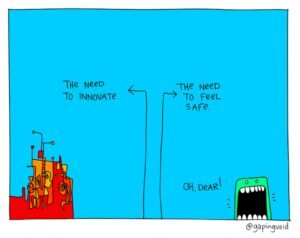
It isn’t just a clever AI layer added to the EMRs we already have. That’s the tempting ‘do minimal’ approach—leaving the record as it is and just adding intelligence on top. But you can’t create a truly portable, governed system if the data is still locked inside different proprietary products on separate servers all over the place. The AI layer is part of the new system, but it’s not a replacement for building it.
It isn’t a demand to rip out your EMR tomorrow. Nothing in it orders that. It’s deliberately designed to roll out in stages.
It’s not just a certification update. Certification used to ask, “can this EMR safely connect to Ontario’s systems?” The PCMR is asking a much bigger question: “Can this become the province’s single primary care platform?”
The bigger idea
Here’s the part I think is most interesting. Right now, one vendor usually controls the record, the data, and the connections, which makes sharing harder than it needs to be. It’s not anyone’s fault—it’s just how things developed. The PCMR aims to change that by creating shared standards, portable data, and a common platform that vendors, the province, and clinicians can build on together, with the patient at the center.
The vendor still provides the record, but now it’s designed to be portable and work well with other systems. The lasting layer on top—like standards, consent rules, an app marketplace, and a provincial data fabric—becomes shared infrastructure everyone in the system can use and trust.
This isn’t just a list of features. It’s a blueprint.
And it’s a blueprint the government is supporting with funding and a long-term commitment to change. This is very different from just replacing one product with another.
This is something different. And I believe it’s a good thing.
Tomorrow, in Part 2, I’ll look at what this blueprint means for the EMR vendors we rely on today, and for the doctors using those systems. Stay tuned.

